Mirrorless vs. DSLR Cameras: What's the Difference, and Which Should You Buy?
The main difference between mirrorless and DSLR cameras is the presence of a mirror and optical viewfinder—not inherent image quality. Compare lens ecosystems, autofocus, video, battery life, size, service, and used-market prices before buying.
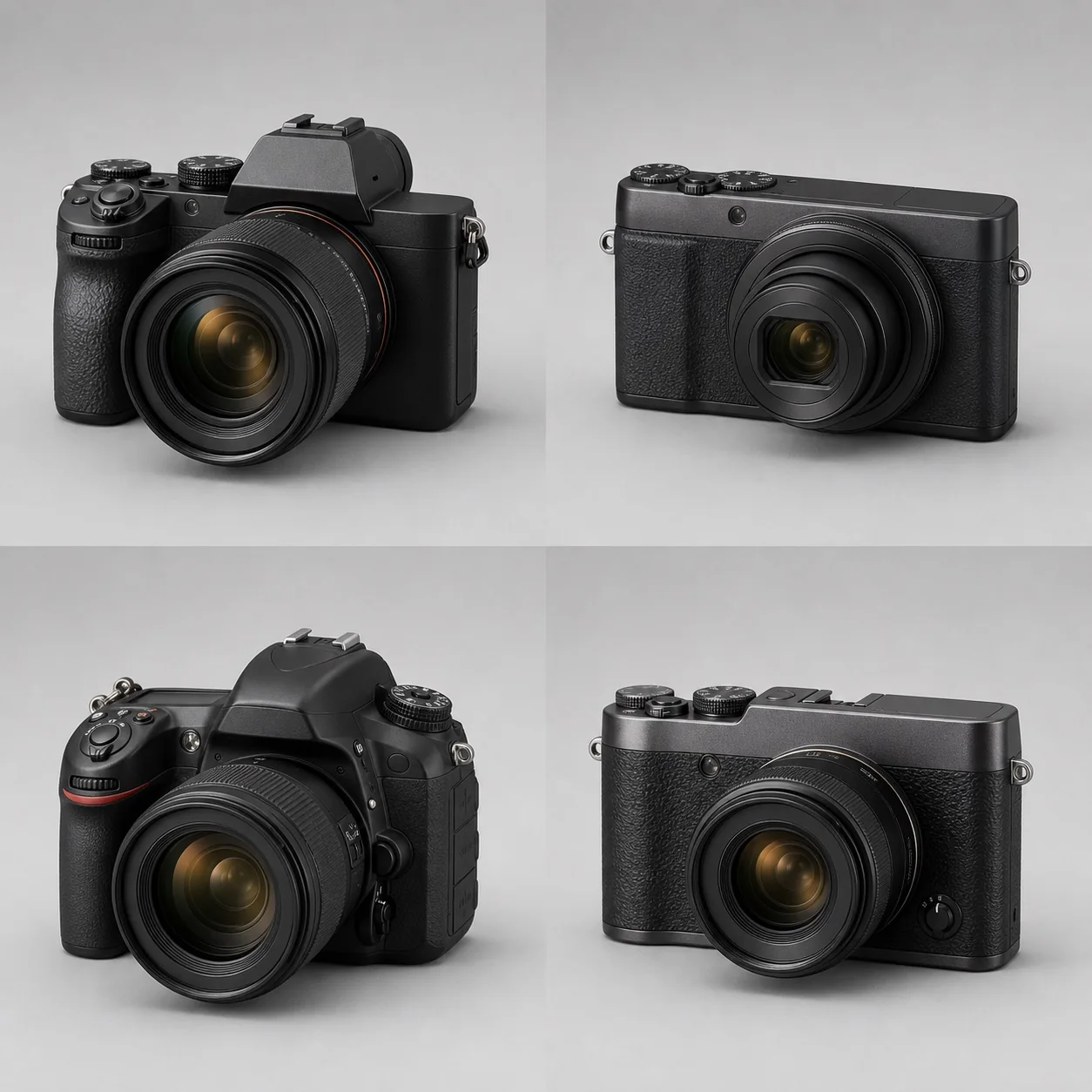
The main difference between mirrorless and DSLR cameras is the presence of a mirror and optical viewfinder—not inherent image quality. Compare lens ecosystems, autofocus, video, battery life, size, service, and used-market prices before buying.
DSLRs use a mirror and optical viewfinder, while mirrorless cameras remove the mirror and rely mainly on live viewing through the sensor. With the same sensor format and comparable technology, the camera's structure alone does not determine still-image quality. Today, your decision should focus more on the lens ecosystem, autofocus, video, battery life, size, service, and used-market prices.
How Do the Two Designs Work?
When you look through a DSLR, its mirror directs light into the pentaprism and optical viewfinder. The mirror flips up when you press the shutter so the sensor can be exposed. In a mirrorless camera, light travels directly to the sensor, and you compose through the screen or an EVF. Canon's technical overview of mirrorless camera design explains how a short flange distance, electronic viewing, and on-sensor autofocus work together. Removing the mirror can shorten the body's flange distance, but the grip, battery, cooling system, and lens still determine the size of the complete setup.
For the viewing experience, see Optical vs. Electronic Viewfinders.
Does Mirrorless Always Mean Better Image Quality?
No. Image quality is determined primarily by sensor size and technology, the lens, exposure, focus, and image processing. Newer mirrorless cameras often have newer sensors and processors, so their advantage comes from that generation of technology—not from the word “mirrorless” itself. Given the same sensor and lens under reasonable conditions, the presence or absence of a mirror does not directly change the light that has been recorded.
When comparing sample images, keep the sensor format, pixel count, lens angle of view, aperture, shutter speed, ISO, and output size consistent. Putting a ten-year-old entry-level DSLR next to a new flagship mirrorless camera only shows that the specific products are from different generations; it does not prove that one design inherently produces better high-ISO or color results.
What Are the Differences in Autofocus, Viewing, and Video?
In optical-viewfinder mode, DSLRs use a separate phase-detection AF module. It responds directly, but its coverage and subject or eye recognition are generally limited by the module. Mirrorless cameras can provide broad on-sensor autofocus coverage, making it easier to combine eye, animal, and video tracking. Older DSLRs may be slow in live view, while newer models may include technologies such as Dual Pixel AF, so these differences should not be treated as absolute rules by category.
Because a DSLR's separate AF module and imaging sensor are not on the same optical path, certain body-and-lens combinations may need autofocus fine-tuning. Mirrorless cameras detect focus on the imaging plane, which can reduce this systematic front- or back-focusing issue, but missed focus can still result from the algorithm, lens motor, low light, or subject recognition. For high-speed shooting, also compare EVF lag, blackout, refresh rate, and sensor readout—not just the burst-shooting figure.
Video requires continuous sensor readout, so mirrorless systems are usually more feature-complete. For the underlying autofocus principles, see Phase Detection vs. Contrast Detection Autofocus.
How Do Size, Battery Life, and Handling Compare?
Mirrorless bodies can be thinner, but full-frame lenses with large apertures are still large. DSLR optical viewfinders use little power, so battery life for still photography is often longer. Mirrorless cameras offer live exposure previews, silent shooting, and in-body image stabilization, while DSLRs often provide mature grips, physical controls, and lower used-market prices. Compare the weight of the complete setup: body, everyday lens, and battery.
For example, a body that is 250 grams lighter may require two extra batteries and a heavier new lens, so your total travel load may not decrease. Include the charger, adapter, memory-card format, and computer-processing needs in the budget as well. Silent electronic shutters can introduce rolling shutter and banding under artificial lighting. Canon's shutter mode manual lists limitations involving flash, burst shooting, sound, and image distortion with the electronic shutter. “No mirror noise” does not mean there are no trade-offs in every situation.
Repairability and used-market supply are also part of the system cost. Discontinued DSLRs often have plenty of inexpensive lenses and batteries available, but new-lens development, manufacturer parts, and firmware support may decline over time. Mirrorless systems are more active, yet they may require expensive native lenses. Check service centers and the focal lengths you actually use in your region instead of relying only on global sales figures.
Can You Still Use Your Old DSLR Lenses?
Many DSLR lenses can be adapted to a mirrorless body from the same manufacturer. Optical image quality does not change simply because of an empty adapter, but autofocus, burst shooting, stabilization, and third-party firmware support must be checked. Camera Lens Mount Compatibility can help you avoid making decisions based on brand names alone.
List every lens you actually use and check, one by one, single-shot and continuous AF, burst speed, video AF, lens corrections, and teleconverter support. After adapting a lens, also check the added length, tripod balance, and how convenient it is to change lenses. If you have to carry an adapter permanently, the supposedly smaller body may not improve the experience. With third-party lenses in particular, verify firmware compatibility and the manufacturer's update channel.
How Should You Choose Between Mirrorless and DSLR Today?
| User situation | What to investigate first | Verification you should not skip | | --- | --- | --- | | Building a system for the first time | New mirrorless bodies and native lens ecosystems | Prices for your target focal lengths, handling, and battery life | | Limited budget, mainly shooting stills | A well-maintained used DSLR | Shutter count, AF module, lens mold or haze, and repair options | | Already own many DSLR lenses | Adapting them to mirrorless or continuing with the current system | AF, burst shooting, stabilization, and balance for every lens | | Sports or wildlife | Specific high-speed models from both categories | Tracking, viewfinder blackout, buffer, telephoto options, and battery life | | Video or hybrid shooting | Usually start by looking at mirrorless | Overheating, rolling shutter, codecs, ports, and power options |
Use the same task checklist when renting your candidates: mount the lenses you actually use, hold each camera continuously for an hour, shoot moving subjects, low-light scenes, long bursts, and the video formats you need. Record failures instead of selecting only the best sample images. Then calculate the three-year total cost of the body, lenses, adapters, batteries, cards, and selling your old system. Finally, use the Five-Step Camera Buying Guide to rank the options. Market trends cannot replace your own lenses and shooting needs.
References
- Canon Global: Mirrorless Camera Technology
- Canon EOS R5 Manual: Shutter Mode and Electronic Shutter Limits