What is the difference between in-body and lens stabilization? Can they work together?
In-body stabilization moves the sensor, while lens stabilization moves an optical group; whether they can work together depends on the camera, lens, and firmware. Advertised stops cannot be added directly, and neither system can freeze subject motion.
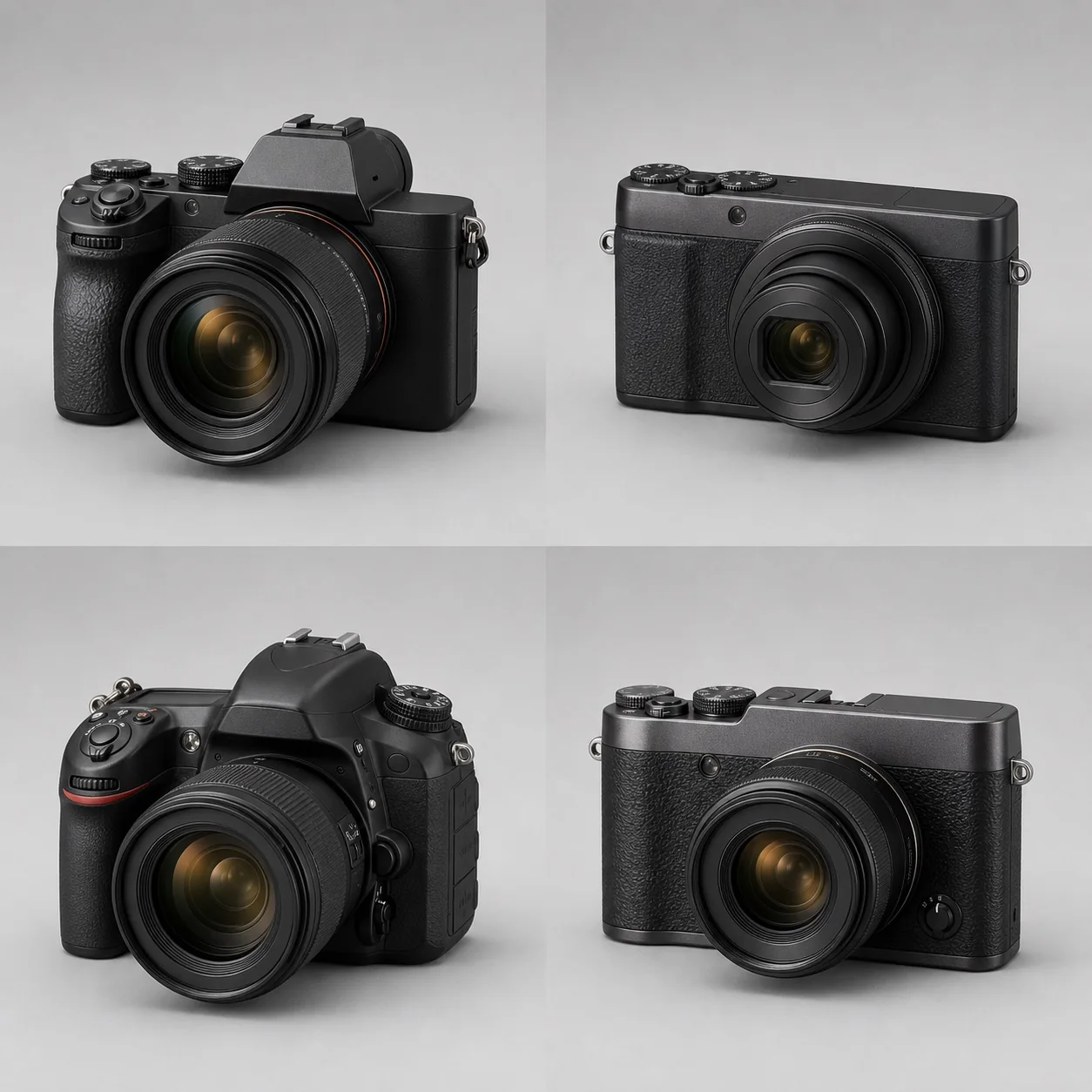
In-body stabilization moves the sensor, while lens stabilization moves an optical group; whether they can work together depends on the camera, lens, and firmware. Advertised stops cannot be added directly, and neither system can freeze subject motion.
In-body image stabilization compensates for camera shake by moving the sensor and can work with most lenses; lens stabilization moves a specific lens group and is often easier to optimize for large-angle shake at telephoto focal lengths. Whether the two systems can cooperate depends on the particular camera, lens, and firmware, and their advertised stops cannot simply be added together.
How do IBIS and OIS work?
IBIS uses gyroscopes to detect movement and shifts the sensor horizontally, vertically, in pitch, yaw, or roll; OIS/IS/VR instead shifts a compensating group inside the lens to redirect the light path. Canon's technical explanation of lens IS describes using gyroscopes to detect angular shake and move optical components, while also distinguishing the more noticeable X/Y shift that occurs at close focus. Different products support different numbers of axes and control strategies, so “five-axis” describes directions of movement and does not mean a fixed five stops of performance.
Stabilization compensates only for movement of the camera equipment. A person turning their head, a bird flapping its wings, or leaves moving in the wind still requires a sufficiently fast shutter speed; the shutter-speed guide cannot be replaced by an advertised stabilization rating.
What are the advantages at different focal lengths?
Wide-angle and standard focal lengths require less sensor movement, so IBIS can also benefit unstabilized prime lenses; at telephoto focal lengths, a small angular movement creates a larger shift across the image plane, and a lens's compensating group is often easier to use early in the optical path while also stabilizing the viewfinder image. At close focus, X/Y shift is more noticeable, and performance also declines.
In practice, results depend on lens weight, sensor travel, how you hold the camera, and your composition. You cannot say that one design is better at every focal length.
Why can't you add the stops from dual stabilization?
If the camera and lens independently compensate for the same movement, they may duplicate each other's work or interfere with one another. When coordinated operation is supported, the system exchanges gyroscope and focal-length data and assigns different axes to the component best suited to handle them; when it is not supported, the manufacturer may require you to enable only one system. 5 stops of IBIS plus 4 stops of OIS does not equal 9 stops.
An adapted lens may not provide focal-length or status information; see how lens adapters affect image stabilization for the relevant limitations.
How should you interpret an advertised number of “stops”?
One stop doubles the exposure time. For example, if a camera reaches the specified success rate at 1/125 second without stabilization, an advertised 3 stops means that under a standardized test it may reach the same judgment at about 1/15 second. CIPA DC-011's optical image-stabilization measurement method specifies the direction of vibration, shooting posture, image evaluation, and statistical method used to report performance under consistent conditions. Individual results still vary with how you hold the camera, the distance, burst shooting, and the output standard.
Use the advertised figure as a comparison across products, then test your own safe limit. It is not a guarantee.
How should you set stabilization for photos, video, and a tripod?
- Handheld photos: Start at a safe shutter speed, shoot test frames, then slow down one stop at a time and check the success rate for important details.
- Moving subjects: Prioritize freezing the subject; stabilization only improves framing and background stability.
- Video: Optical and in-body stabilization can smooth small shakes, while electronic stabilization often adds a crop; walking motion may still require a gimbal.
- Tripod: Modern systems may detect a tripod automatically, but if drift appears during a long exposure, follow the manual and turn stabilization off or use tripod mode.
- Panning: Use the dedicated mode so the system preserves intentional horizontal movement.
If the image is unclear, return to troubleshooting blurry photos to distinguish ineffective stabilization from problems with focus, depth of field, or subject motion.
References
- CIPA DC-011: Measurement of Optical Image Stabilization Performance for Digital Cameras
- Canon: Interchangeable Lenses—Image Stabilizer