How to Choose a One-Camera, One-Lens Travel Kit: Balancing Focal Length, Weight, and Image Quality
Choose a one-camera, one-lens travel kit for cities, documentary work, landscapes, family photos, or telephoto subjects. Compare standard zooms, superzooms, and compact primes by focal length, weight, aperture, and the risk of changing lenses.
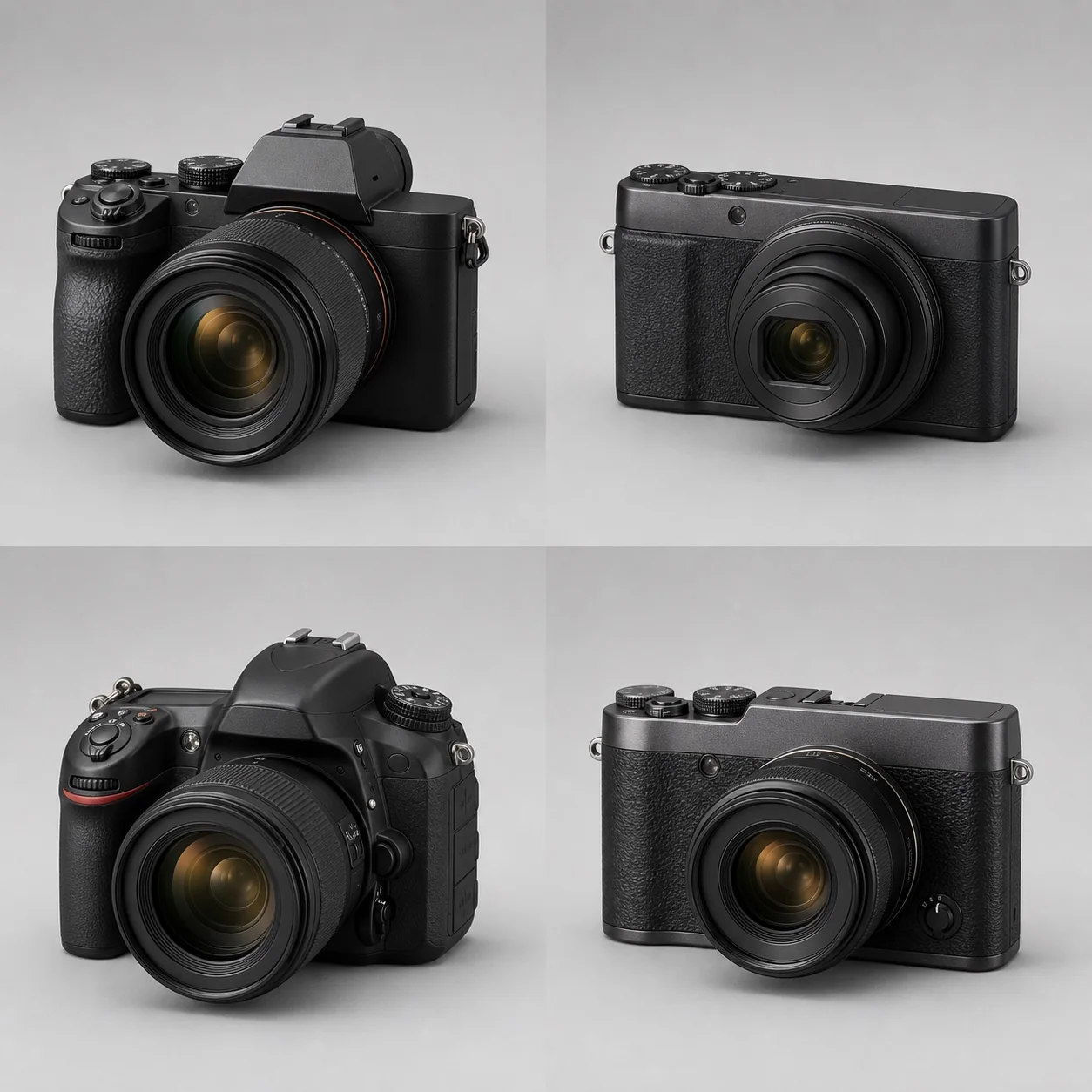
Choose a one-camera, one-lens travel kit for cities, documentary work, landscapes, family photos, or telephoto subjects. Compare standard zooms, superzooms, and compact primes by focal length, weight, aperture, and the risk of changing lenses.
There is no single best one-camera, one-lens setup for travel. If you are visiting an unfamiliar city for the first time and expect a wide range of subjects, start with a zoom covering roughly 24–105mm or 28–200mm equivalent. If you value portability, night photography, and a deliberate shooting rhythm, consider a 28mm, 35mm, or 40mm equivalent prime. Choose your focal-length range based on the subjects you actually expect to shoot, then compare the complete kit by weight, maximum aperture, stabilization, and minimum focus distance.
Choose the Focal Length for Your Subjects, Not the Lens Price
| Travel priority | Suggested equivalent focal-length starting point | Main advantage | Main trade-off | |---|---|---|---| | Cities, documentary work, and food | 28mm, 35mm, or 40mm prime | Light, discreet, and fast | You cannot quickly zoom in for distant details | | Landscapes, architecture, and family photos | 24–70mm or 24–105mm | Balanced coverage from wide angle to short telephoto | Limited reach for very distant subjects | | One-lens travel, wildlife, and distant scenes | 28–200mm or 24–240mm class | Fewer lens changes and a broad range | Usually a slower aperture; edge quality and weight need to be tested in practice | | General APS-C travel | Approximately 16–80mm or 18–135mm | Broad equivalent-angle coverage in a lighter system | May require higher ISO in low light | | Using a phone as a wide-angle supplement | Approximately 40–75mm prime or compact zoom | Complements the phone's perspective | Splits the workflow across two devices |
All focal lengths in the table use a 35mm-equivalent field of view. APS-C and Micro Four Thirds users should convert them according to the crop factor; see Equivalent Focal Length and Crop Factor for the method. Nikon's focal-length guide connects wide-angle, standard, and telephoto ranges with typical subjects. It also notes that zoom lenses are useful when switching between subjects such as landscapes and portraits, while reducing the number of lens changes and the chance of getting dust inside the camera. Nikon's Focal-Length Guide
Choosing Between a Standard Zoom, Superzoom, and Prime
The strength of a standard zoom is balance. An equivalent 24mm can cover architecture, interiors, and expansive scenes, while the midrange works for people and details. Constant-f/2.8 versions perform better in low light but are usually heavier; f/4 or variable-aperture versions are often better suited to a full day of walking. See Constant-Aperture vs. Variable-Aperture Lenses for more.
A superzoom trades some aperture, size, or optical performance for convenience. It is a good fit when changing lenses is impractical, when there may be dust or sand, or when subject distances vary widely throughout the trip. Sony's official lens guide likewise positions high-magnification zooms covering wide angle through telephoto as a way to get multiple perspectives from one lens while traveling light. Sony's Guide to Zoom and Prime Lenses
A prime makes you choose the composition by moving your feet and refining your framing, but it can provide a wider aperture in a smaller package. An equivalent 35–40mm is a versatile compromise for environmental scenes, food, people, and street photography. Its limitations become obvious, however, if your itinerary includes cramped interiors and distant wildlife. Nikon uses a 40mm f/2 as an example of a compact lens that can handle both wider scenes and people, making it a practical option when traveling with just one lens. Nikon's 40mm Travel Example
Decide by the Weight You Will Actually Carry, Not the Camera's Weight
A one-camera, one-lens kit should include the camera body, lens, hood, batteries, strap, and any filters you genuinely need. A body that is 100 grams lighter may require a heavier lens or an extra spare battery, leaving the complete kit no lighter at all. Use the Camera Finder to check body dimensions, weight, battery, and weather-resistance specifications, then confirm the lens weight and minimum focus distance on the manufacturer's product page.
Before leaving, do a two-hour city-walking test. Carry the equipment exactly as you would on the trip, and record the focal lengths you actually use, the photos you miss because of the weight, and whether your nighttime ISO rises beyond what you consider acceptable. If your past photos' EXIF data shows that 80% of your shots cluster around one focal length, you can make a more evidence-based choice. See Photo Metadata and File-Naming Guide for more on using EXIF.
Five Often-Overlooked Specifications
- Minimum focus distance: For food, crafts, and flowers, close-up capability is often more useful than the long end of the zoom.
- Image stabilization: Helpful for static night scenes, but it cannot freeze people walking by. Check the manual to confirm whether the body and lens work together.
- The limits of dust and drip resistance: A complete sealed system requires both the body and lens to have appropriate sealing, and even then it is not waterproof.
- Charging method: USB-C charging or power delivery can eliminate a dedicated charger, but make sure your power bank supports the required protocol.
- Filter thread size: Large-diameter CPL and ND filters can add substantially to both cost and bulk.
For what weather sealing actually means, read Does Camera Weather Sealing Mean Waterproof?. For flying with your equipment, see the Camera and Battery Air-Travel Guide.
A One-Minute Decision Process
- Not sure what you will photograph: choose a standard zoom.
- Know you will shoot distant wildlife, stages, or mountain details: choose a superzoom with a long telephoto end.
- Mostly photographing city life and willing to move to compose: choose a 28–40mm equivalent prime.
- Often shooting people indoors or at night: prioritize a wider aperture over the longest focal length.
- If the kit is too cumbersome to carry every day, make the system smaller; the best image-quality specifications are meaningless if you leave the camera at home.
Finally, check the mount, image circle, and autofocus compatibility. Before buying an adapted lens or an APS-C lens in particular, read Can Lenses from Different Brands and Mounts Be Used Together? to avoid discovering before your trip that you will have a crop, no stabilization, or limited functionality.
References
- Nikon: Understanding Focal Length
- Nikon: Features of Travel and Landscape Lenses
- Sony: Zoom and Prime Lenses