Full frame or APS-C: which should you choose?
Full frame or APS-C? Compare sensor area, low-light performance, resolution, body weight, and lens cost, with advice for different shooting styles.
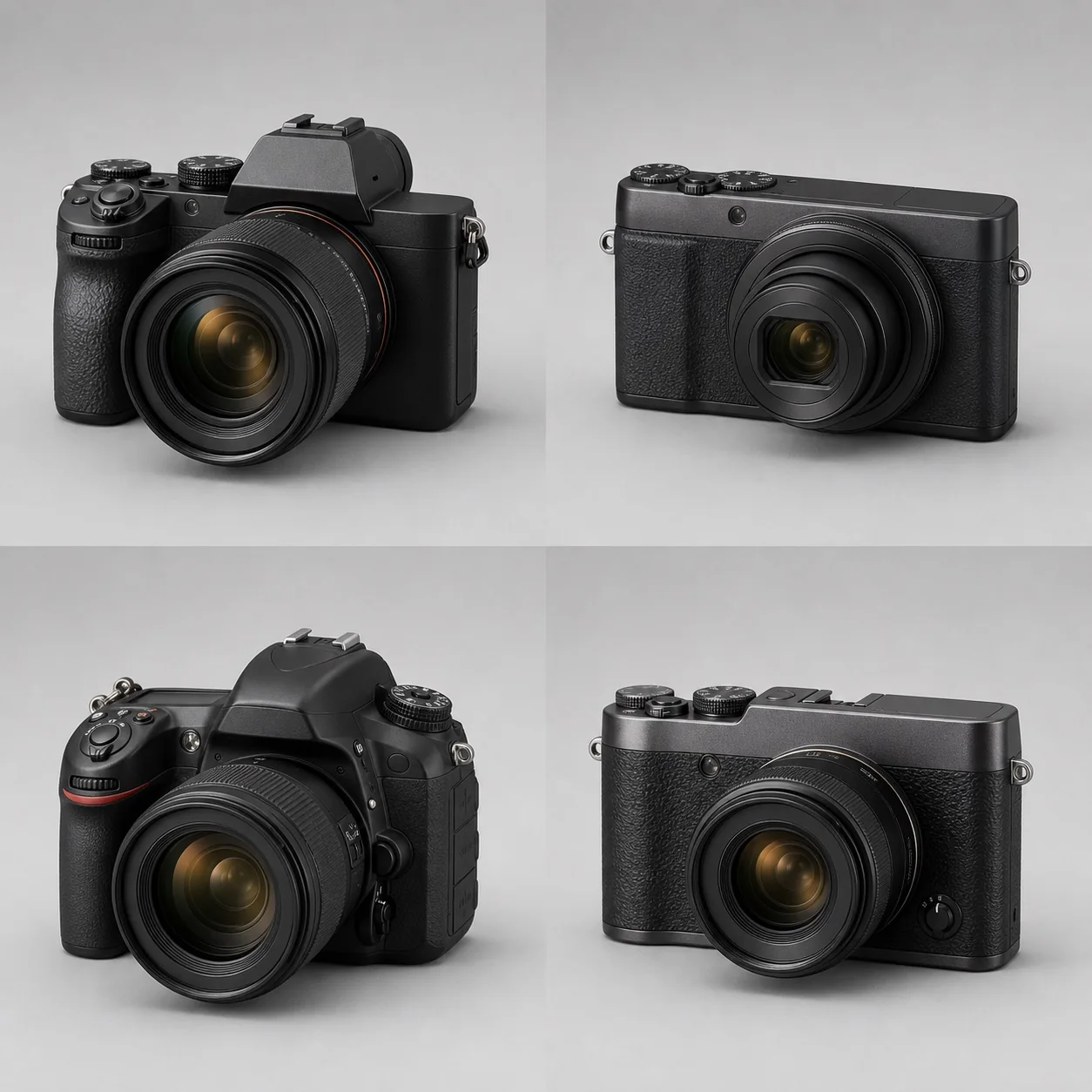
Full frame or APS-C? Compare sensor area, low-light performance, resolution, body weight, and lens cost, with advice for different shooting styles.
Full frame offers more light-sensitive area, while APS-C is usually lighter and less expensive. This is not a ranking of “professional” and “amateur” formats. The better choice depends on your subjects, lenses, output requirements, and willingness to carry the complete kit.
How different are full-frame and APS-C sensor sizes?
A common full-frame sensor measures about 36 × 24 mm, or 864 mm². APS-C is not one exact size; a 23.5 × 15.7 mm example measures about 369 mm², roughly 43% of the full-frame area. Dimensions and crop factors vary slightly by manufacturer, as shown in the sensor size table.
Sensor area affects the potential to collect light, but it cannot determine a finished photograph by itself. Sensor generation, resolution, lens, exposure, noise reduction, and final output size all affect the result.
Does full frame always produce better image quality?
No. Area determines potential, not the inevitable result of every picture. With similar technology, resolution, and output conditions, full frame generally offers more high-ISO, dynamic-range, and shallow-depth-of-field headroom. A newer APS-C sensor can still outperform an older full-frame model, and a better lens or more accurate exposure can matter more than the format difference.
Comparisons should use the same framing, depth of field, shutter speed, and final output size. A full-size view of one file and a reduced view of another do not provide a useful conclusion.
Does crop factor change focal length?
No. A 50 mm lens remains a 50 mm lens on an APS-C body; the smaller sensor records a narrower angle of view. With a crop factor near 1.5×, its framing resembles the angle of view from a 75 mm lens on full frame.
That narrower framing can be useful for sports and wildlife, but it does not physically lengthen the lens or automatically add light or detail. See equivalent focal length and crop factor for the complete method.
How should you understand depth of field and low light?
At the same angle of view, shooting distance, and f-number, full frame can produce shallower depth of field. This can help portraits and low-light event work, but shallow focus is not always desirable. Macro, landscape, products, and group photographs often need more of the scene to remain sharp.
The low-light advantage also depends on lenses. An APS-C camera with a fast prime may permit a lower ISO or faster shutter than a full-frame camera fitted with a slower zoom. Format should therefore be compared as part of a complete kit.
Is lower price the only APS-C advantage?
No. The advantage can extend across the system: bodies are often lighter, and format-specific lenses can be smaller. At the same total budget, APS-C may leave more money for lenses, batteries, lighting, or travel.
Light weight is not guaranteed. A high-specification APS-C body with a constant-aperture zoom may approach a lightweight full-frame combination. Compare the actual body-and-lens kits you would buy rather than bodies alone.
Which format fits each shooting scenario?
- Travel and street: Start with APS-C or lightweight full frame and compare total weight with the everyday lens attached.
- Portraits and events: Full frame more easily combines low light, shallow depth of field, and high-ISO headroom, at a higher lens cost.
- Sports and wildlife: APS-C crop framing helps, but continuous autofocus, buffer depth, and telephoto options remain essential.
- Landscape and large output: High-resolution full frame offers more detail and cropping room, though lenses, support, and technique matter too.
- Video production: Do not judge by format alone; readout speed, heat, crop, stabilization, and lens choice may have a greater effect.
Quick conclusion
For a lighter system, lower total cost, or travel, everyday, and distant subjects, begin with APS-C. For frequent low-light, portrait, event, commercial, or high-resolution work, give full frame more weight.
If both formats satisfy the image-quality requirement, choose the kit you will carry and can equip with suitable lenses. Continue with the five-step camera guide, then use the camera finder to narrow the models.