What Does Lens Focal Length Mean? What Different Millimeter Values Can Capture
Lens focal length is the distance from the principal plane to the image-side focal point when the lens is focused at infinity; together with sensor size, it determines angle of view. This guide explains wide-angle, standard, telephoto, and perspective.
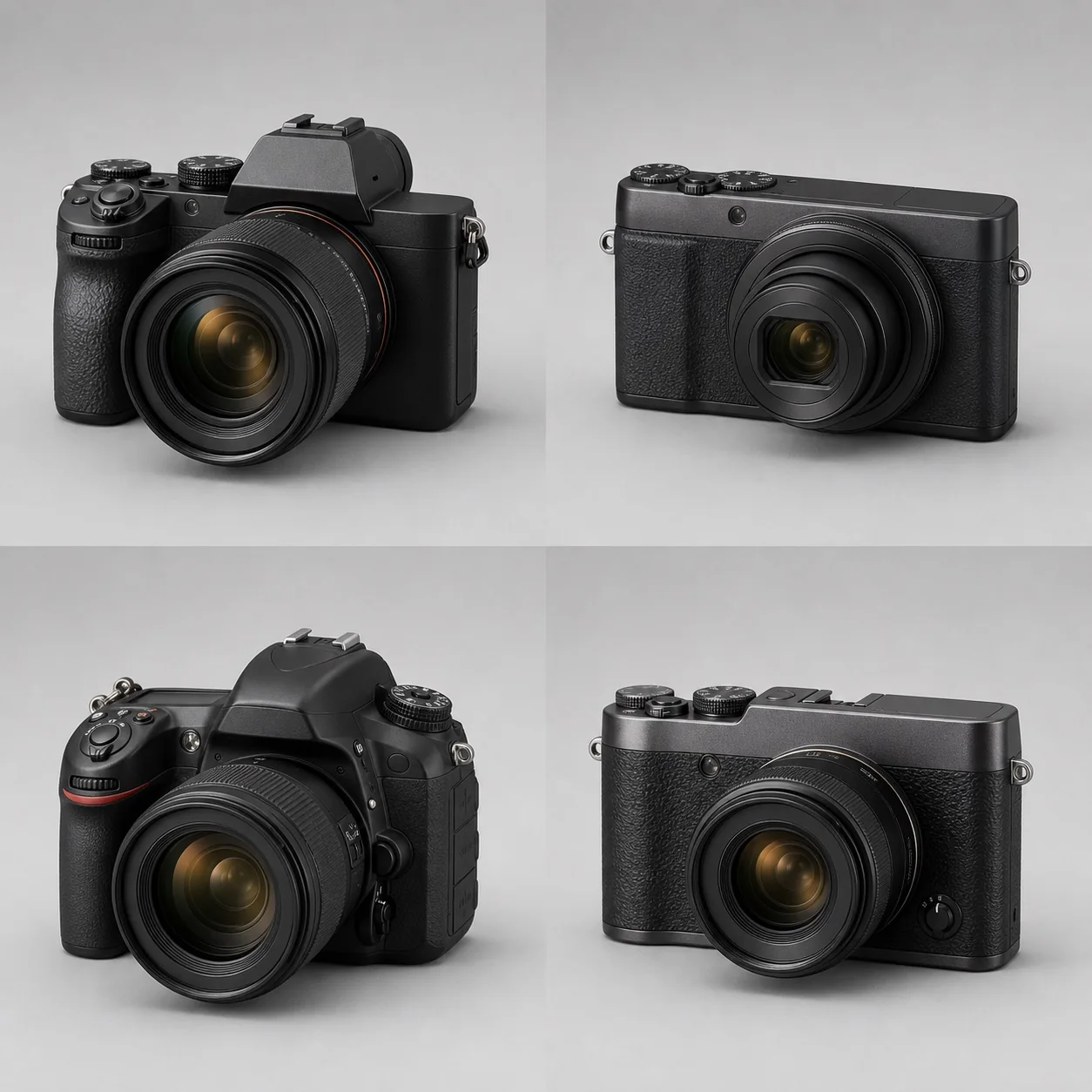
Lens focal length is the distance from the principal plane to the image-side focal point when the lens is focused at infinity; together with sensor size, it determines angle of view. This guide explains wide-angle, standard, telephoto, and perspective.
Focal length is an optical property of a lens that, together with sensor size, determines the angle of view. Shorter focal lengths generally show a wider view, while longer focal lengths show a narrower one. The idea that wide-angle lenses exaggerate and telephoto lenses compress space mainly comes from photographers changing their shooting distance to maintain the composition, not from focal length changing spatial perspective by itself.
What Do the Millimeters of Focal Length Actually Represent?
In the thin-lens model, focal length is the distance at which parallel light converges at the focal point. A photographic lens contains multiple groups of elements, so its stated focal length usually refers to the distance from the image-side principal plane to the focal point when focused at infinity; it is not the physical length of the lens barrel. Nikon's focal length explainer likewise defines focal length as this optical distance at infinity focus and makes clear that it is not the actual length of the lens barrel. Internal-focusing lenses may also change their effective focal length and angle of view at close distances, a behavior commonly called “focus breathing.”
Focal length is a property of the lens itself. A 50mm lens is still 50mm when mounted on an APS-C camera body; the smaller sensor simply captures a narrower portion of the image. Comparisons across sensor formats should use equivalent focal length and crop factor.
How Do Focal Length and Sensor Format Determine Angle of View Together?
At the same focal length, a larger sensor records a wider portion of the image circle; with the same sensor format, a longer focal length produces a narrower angle of view. Nikon's DSLR lens overview similarly associates longer focal lengths with narrower angles of view and higher magnification, while shorter focal lengths do the opposite. Diagonal angle of view can be calculated from the sensor's diagonal and the focal length, but real lenses may differ because of distortion, focusing distance, and rounding in the stated focal length.
On full-frame, focal lengths of about 35mm and below are commonly considered wide-angle, roughly 40–60mm standard, and 85mm and above increasingly telephoto. These are conventions of use, not strict boundaries. With APS-C and Micro Four Thirds, convert to an equivalent angle of view before discussing the category.
What Can 35mm, 50mm, and Telephoto Focal Lengths Capture?
- Around 24mm full-frame equivalent: architecture, interiors, and expansive landscapes; edges can stretch easily when you move close to a person.
- Around 35mm: environmental portraits, street photography, and travel; it can show the person and surroundings together.
- Around 50mm: a natural angle of view with broad usefulness, well suited to everyday photography and half-body portraits.
- Around 85–135mm: portraits, stage performances, and details; you get more working distance and a narrower view of the background.
- 200mm and longer: sports, wildlife, and distant scenes with compressed backgrounds; these focal lengths require faster shutter speeds and steadier support.
Choosing a longer focal length is not automatically a more professional choice. Your shooting position, subject matter, and what you are willing to carry all matter. For a first purchase, compare prime and zoom lenses.
Does Focal Length Change Perspective?
Perspective is determined by the camera's position. If you photograph from a fixed position and crop a wide-angle photo to match the composition of a telephoto photo, the proportions between near and far objects remain essentially the same. In real-world wide-angle photography, you often move closer to the subject, making nearby objects look larger and distant objects smaller, which creates an exaggerated sense of space. With a telephoto lens, you move back to fit the subject into the frame, reducing the difference between near and far objects and making the space appear compressed.
That is why, for portraits, it is more sensible to first choose a distance that keeps facial proportions natural and then use focal length to compose the image than to stand in place and only turn the zoom ring. You can verify the difference with a perspective experiment using focal length and shooting distance.
How Should You Choose Your First Lens?
- Use the EXIF data from your phone photos or current zoom lens to identify the most commonly used equivalent focal lengths.
- Confirm whether you have room to step back indoors and what working distance your subjects require.
- Decide whether you need zoom flexibility or prioritize a wide aperture, low weight, and shallow depth of field.
- Include the combined weight and price of the lens and camera body, as well as filters and the lens hood.
- Narrow down the camera body using the camera finder, then check the lens ecosystem available for its mount.